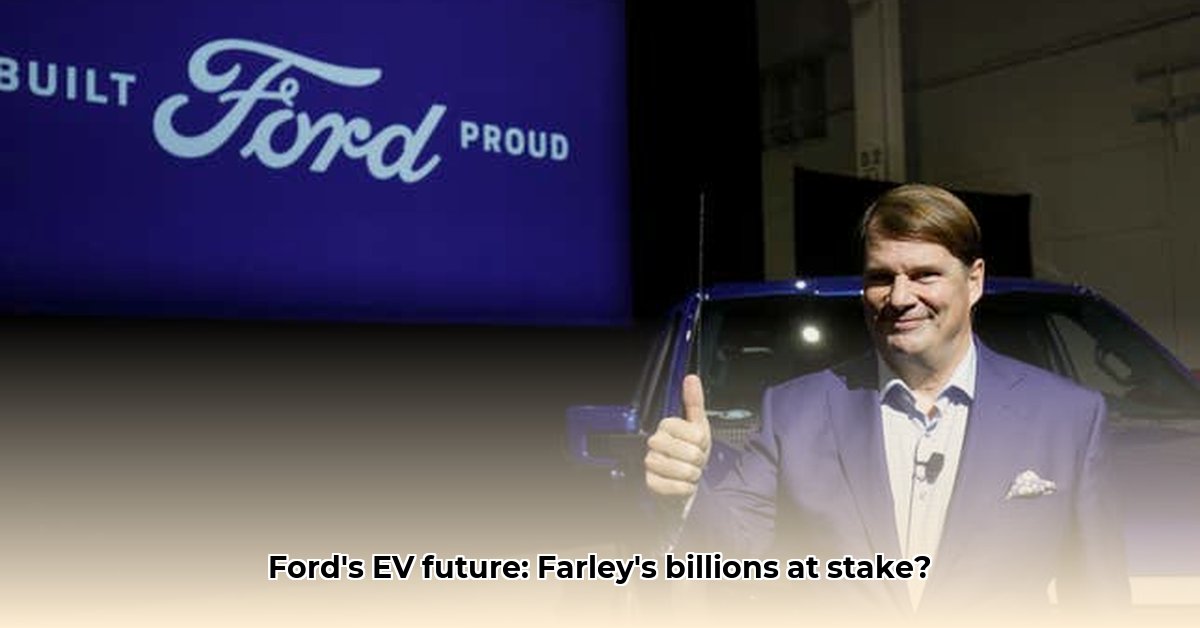
Farley's Leadership at Ford: A High-Stakes Gamble on Electrification
Jim Farley's tenure as CEO of Ford Motor Company is a compelling narrative of high-stakes leadership in the rapidly evolving automotive industry. His ambitious strategy to aggressively pursue electric vehicle (EV) dominance presents a unique challenge, intertwining his personal financial success with the company's transformation. Understanding Farley's compensation, the risks and rewards of Ford's EV gamble, and the broader impact on the company's financial performance requires a thorough examination of his leadership style and strategic decisions. How has this ambitious gamble impacted Ford and Farley's own net worth? For comparison, see CEO compensation data.
Farley's Compensation: A High-Risk, High-Reward Model
Farley's compensation package is not simply a fixed salary; it is a dynamic reflection of Ford's performance, particularly its progress in the EV market. His substantial salary and bonus structure are directly tied to pre-defined metrics encompassing not only financial performance but also strategic milestones in the electric vehicle transition. This inherently risky approach aligns his interests directly with Ford's success in a highly competitive and rapidly changing sector. This has generated considerable debate. Critics point to Ford's recent financial performance, suggesting his compensation is excessive given the short-term challenges associated with the EV transition. Conversely, others argue the inherent risks of leading this monumental transformation justify the compensation structure; the potential rewards for successfully navigating this transition are enormous, leading to significant increases in Ford's value and, consequently, Farley's net worth. This compensation design encapsulates the core principle of aligning leadership incentives with the company's long-term strategic goals. Isn't this approach critical when undertaking such a transformative endeavor?
Ford's EV Strategy: A Bold Bet on the Future
Farley's vision involves a complete reimagining of Ford, transforming it into a leading player in the electric vehicle market. This requires immense capital investment in research and development, the construction of new manufacturing facilities, and the development of cutting-edge battery technology. This long-term strategy represents a considerable financial risk. The market's reception of EVs, technological setbacks, and competitive pressures all pose significant uncertainties. However, the potential payoff is equally substantial: a rejuvenated Ford dominating the increasingly prominent electric vehicle sector. This inherent risk and reward dynamic underscores the complexity of assessing Farley's leadership and its impact on his personal wealth. How effectively will Farley manage this risk while driving innovation and capturing market share?
Ford's Financial Performance: Navigating the Transition
Evaluating Ford's financial performance under Farley's leadership isn't straightforward. While the company is making significant investments in its electric future, short-term profitability has been inconsistent. This is not unexpected; major strategic shifts seldom yield immediate financial windfalls. Many financial analysts view these short-term dips as temporary costs associated with growing pains. They argue that the long-term returns will be substantial once Ford's EV investments begin to produce significant revenue. This long-term perspective is crucial when assessing Farley's performance and its impact on his net worth. However, maintaining investor confidence throughout this transition is paramount for long-term success.
Farley's Leadership Style: A Balancing Act
Farley's leadership style plays a significant role in Ford's success. His communication with employees, investors, and consumers is pivotal. His ability to manage internal conflicts, foster a cooperative work environment, and inspire a forward-thinking culture will largely determine Ford's ability to execute its ambitious electrification strategy. Some might suggest a more collaborative leadership style could enhance employee engagement and spur innovation and problem-solving. Others might argue his approach is necessary given the sheer size and complexity of the company. Ultimately, his leadership's effectiveness will be judged not only on financial results but also on the overall shift in Ford's organizational culture and its ability to effectively navigate the transition to an electric future. Will his leadership style prove agile enough to adapt to the constantly evolving landscape of the EV market?
Peer Comparisons: Contextualizing Farley's Compensation
A comparative analysis of Farley's compensation with that of other CEOs in the automotive industry provides valuable context. While precise numbers can vary based on the specifics of each company's reporting, exploring relative compensation levels within the context of company performance is essential.
(Note: A comprehensive table comparing CEO compensation and recent company performance would be inserted here, drawing data from reputable financial sources. The table would include relevant metrics such as total compensation, revenue growth, and EV sales figures for each CEO.)
Assessing CEO Compensation Effectiveness in the Automotive Industry
Key Takeaways:
- Evaluating CEO performance requires a holistic approach that goes beyond simply examining shareholder value.
- A balanced scorecard approach considers factors like strategic vision, talent management and resource allocation.
- A long-term perspective is crucial; short-term fluctuations should be seen in the broader context of long-term strategic goals.
- Transparency and accountability in evaluation processes are also critical.
Jim Farley's case exemplifies the challenges of evaluating CEO compensation in the automotive industry. His leadership, particularly his risky bets on EVs, necessitates a nuanced and comprehensive evaluation approach.
Beyond the Bottom Line: A Multifaceted Assessment
Focusing solely on Ford's stock price is insufficient. We need a broader assessment. How effectively has Farley steered the company through the EV transition? Has he fostered a culture of innovation? How well has he managed resources? These questions are essential for evaluating his compensation and its alignment with his actions. A successful CEO requires skills beyond simple financial acumen; effective leadership spans diverse domains, demanding a multifaceted evaluation strategy.
A Framework for Evaluating Farley's Performance
To evaluate Farley's impact and compensation, a multi-dimensional framework is needed:
Strategic Vision & Execution: How effectively has Farley's EV vision translated into tangible results? This involves analyzing market share, new product launches, and the overall trajectory of Ford's EV efforts.
Financial Performance: Ford's profitability, revenue growth, and shareholder returns—compared to industry benchmarks—are crucial.
Talent Management & Culture: Evaluating the strength of Ford's leadership team, employee satisfaction, and the overall organizational culture under Farley's leadership.
Risk Management: Ford's EV transition is inherently risky. How well has Farley managed challenges, demonstrating financial prudence and foresight?
Sustainability: Integration of sustainability goals into Ford's operations and strategy.
Aligning Compensation with Performance
Only after assessing Farley's leadership against these key performance indicators can we accurately evaluate the effectiveness of his compensation. Does it reflect his contributions, risks taken, and outcomes? This nuanced analysis transcends simple comparisons and acknowledges the inherent complexities of leading a major automaker in a time of rapid technological change. The effectiveness of his compensation is only revealed through this thorough, multi-faceted evaluation process.